

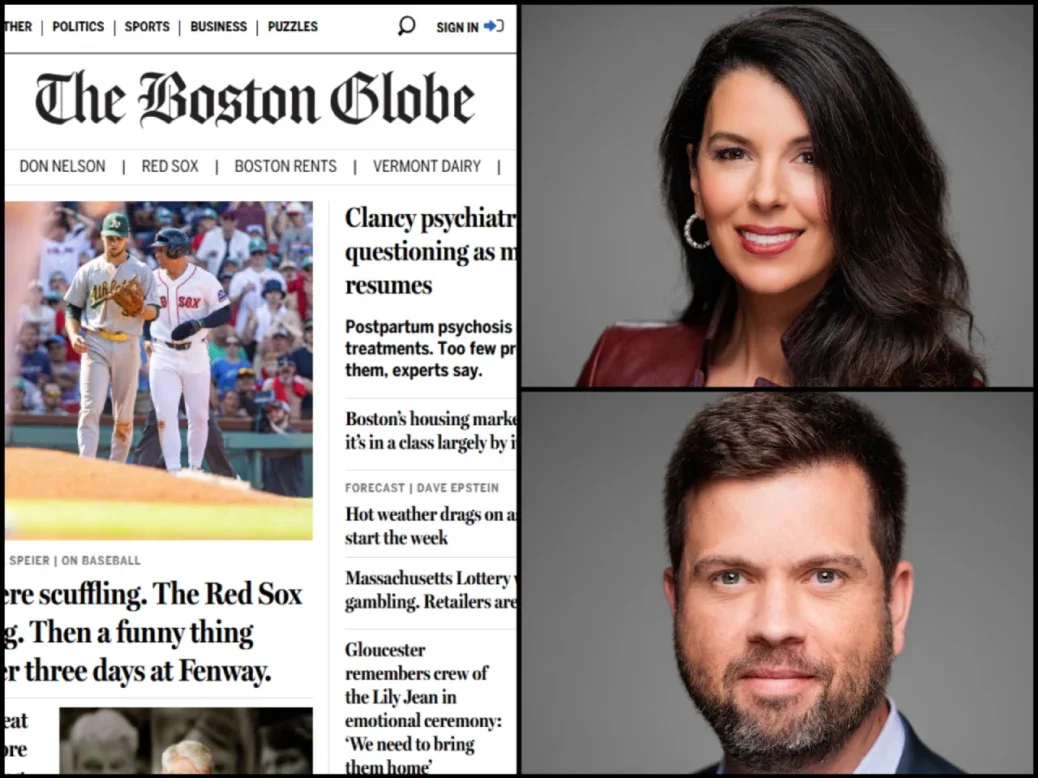
The Boston Globe CEO Linda Henry told Press Gazette how investment in local and specialist content is part of a strategy to get more potential subscribers in the “front door”.
The Globe offers a generous $1 for six months introductory offer and the hope is that investment in new content areas will persuade more customers to sample and, ultimately, stick around after the offer period ends.
Globe Media is also experimenting with bundling subscriptions across the Boston Globe, Boston.com (its newly paywalled sister website for general news and lifestyle content) and Boston Magazine, which it acquired last year.
Married couple Linda Henry and John W Henry, who also own the city’s baseball team the Red Sox, bought The Boston Globe from The New York Times Company for $70m in 2013 after it suffered heavy losses. It is now growing and in profit.
Linda Henry, who spent seven years as managing director before becoming chief executive in 2020, told Press Gazette that since 2013 they have “invested heavily each year in rebuilding, strengthening, and rethinking every aspect of this 154-year-old institution, expanding to become a modern and strong multimedia platform”.
She said: “We attribute our success to a few factors: the special community that we serve, the world-class journalism we produce, the substantial investments we have made in the long term strength and stability of the organisation, and our paywall strategy.”
After the introduction of a strict metered paywall and a blanket offer to trial the Globe website for six months at $1 (after which a digital subscription costs $27.72 (£20.50), the title saw huge growth between 2019 and 2021 although it subsequently tapered off.
Tom Brown, chief consumer revenue officer, told Press Gazette: “After that growth period, we’ve seen stable engagement and retention rates. Total subscribers are up 30%, and digital subscribers are up 180%, since 2019.”
As of April, the Globe had 313,000 paid digital-only subscribers, of which 50,000 were part of more than 40 group/corporate subscription with recent sign-ups including Northeastern University and MIT.
Brown said group subscriptions had been a “small, steady” part of the business for years due to Boston being a “hub of higher education, healthcare, and innovation” but they have seen “a lot of growth over the past year” leading to the recent recruitment of a dedicated group subscriptions manager.
Boston Globe leadership pinpoint geographic and topic areas to expand for subscriptions growth
CEO Henry said there is “definitely room for growth locally and nationally” for Globe subscriptions and they have not yet hit a ceiling.
She said the title has subscribers in all 50 US states and 76 countries and around 25% of subscribers, and 65% of the non-subscriber audience, live outside the core patch.
“That speaks to the strength of our journalism and the national resonance of our storytelling,” Henry said, although she noted Greater Boston “will always remain the centre of our mission”.
She said they are now seeking growth by “investing in deepening our coverage both by area and by topic”, a strategy referred to internally as a “new front door” for people to walk through and access the Globe’s content. This has included expansion of coverage of the New England region around Boston.
For example, Henry said, the Globe has built a “large, award-winning bureau in Rhode Island and dedicated coverage of New Hampshire and Cambridge, Massachusetts”.
“We also have been investing in topics that are already strong performers, like business, politics, and high school sports, in our relentless pursuit to better serve our readers.” She also cited new newsletters covering state politics, local business and the Boston suburbs of Camberville, and an emoji-filled newsletter to introduce younger readers to the Globe and Boston.com called B-Side, hosted on Beehiiv.
Henry also pointed to the introduction of bundled subscription offerings across the publisher’s titles, saying they had seen “great initial success. So there’s a lot to be optimistic and excited about.”
Boston Magazine itself was said to have been growing direct subscribers “at a remarkable rate” since its acquisition last year.
Games traffic offsets AI Overviews hit to article referrals
Games and puzzles are another area of investment. Brown said about 20,000 subscribers regularly play Boston Globe games, which include a crossword, word games Align and Word Flower, maths game KenKen and a STAT Mini Crossword from sister B2B science and health title STAT.
Brown described a “direct correlation between game usage and subscriber retention”, adding: “They also play an important role in attracting and engaging non-subscribers, accounting for about 17% of their overall usage.”
Games are part of a habit-building strategy that is keeping the Globe robust amid an industry-wide fall in traffic from Google following the arrival of AI Overviews and other AI search answers.
Overall referrals to major US news websites from organic Google search were down by 38% in the year to November 2025 according to Chartbeat analysis.
Monthly visits in the US to the Globe website peaked in March 2025 at 12.3 million but in July 2026 were at the same level as November 2024 (9.4 million).
Games traffic has helped offset traffic declines to Boston Globe articles in the past 18 months, although search referrals to article pages now appear to be stabilising, a spokesperson told Press Gazette.
Citing internal Adobe Analytics data, Brown said organic search traffic to The Boston Globe website was down 3% in the first quarter of 2026 compared to the same period in 2025.
The spokesperson added that in Q2, search traffic was down just 3% compared to Q1 when games traffic was excluded.
Brown said: “AI Overviews are certainly affecting evergreen content and topics where readers are just looking for a quick answer. But so far, the impact is much less pronounced on the content that differentiates The Boston Globe: original, deeply reported, local stories that you can’t get from an AI Overview or a national outlet.
“So for us, it’s becoming less about maximising clicks, and more about attracting readers with quality journalism that creates real value for them. The AI Overview can provide you with basic facts, but it will never make you as informed as a Boston Globe subscriber.”
Brown noted that conversions per million visitors has become one of the Globe’s “most important metrics” to help them “understand how effectively we’re turning attention into subscriber growth”.
He added: “We’re also investing in more sophisticated ways to measure the value of our journalism. The goal isn’t to quantify how many people read an article, but rather how that article strengthens our business through acquiring new subscribers, deepening their engagement, or encouraging their loyalty.”
Asked what will make the Globe most resilient from AI disruption and changing audience behaviours, Henry responded: “The biggest shift we’re seeing is that AI is making information abundant and inexpensive. It’s getting very good at summarising what happened. What it can’t do is replicate life experiences and trust, and that’s where our resilience lies.
“It starts with original, regional journalism. The more local and deeply reported our work is, the less it can be substituted. AI can summarise a city council meeting, but it can’t be in the room cultivating the sources that truly allow readers to understand what happened and why.
“We’re also investing heavily in products that build habits. In an era where information is everywhere, our newsletters, app, and games become part of people’s routines. That’s critical to our success.
“And we develop relationships that don’t depend on search engines and social media. Our subscribers email our reporters directly. The community sells out our events, which bring people together around shared interests and conversations. AI can’t replicate that.
“At the same time, we’re leaning into AI. We view it as a critical business tool to empower our employees, scale their abilities, and extend their expertise. We know media companies who resist technology won’t thrive.
“But ultimately, our strategy is simple: use AI to help our people do their best work, while continuing to invest in their human creativity. In many ways, we just need to build on what’s always made us successful.”
‘We’ll still be printing a newspaper in five years’
Although the future of the business will be driven by reader revenue, Henry said, advertising “remains strong. When you have a large, highly engaged subscriber audience it allows you to really optimise your advertising inventory.
“In the first quarter, our direct-sold digital advertising, indirect advertising, and events were all up more than 20% from last year.”
Events include the Future of Medicine Summit, Tech Innovation Summit and Health Equity Summit. Another growth area is Boston Globe Media Productions which adapts the publisher’s journalism into film and TV such as the FX series American Sports Story: Aaron Hernandez, inspired by an investigative podcast by the Globe Spotlight team.
Print is still profitable for the Globe, Brown said. In the six months to 30 September last year, the newspaper had a weekday print circulation of 45,600, down 10% year on year.
Despite the circulation decline, price rises have kept revenue table. He said: “We have tens of thousands of subscribers who have a deep affinity for physical newspapers and we’re committed to continuing to serve them as long as it makes sense.”
Email pged@pressgazette.co.uk to point out mistakes, provide story tips or send in a letter for publication on our "Letters Page" blog
